One SaaS Analytics Platform vs. a Stack of Five: The Math Most Teams Avoid
analytics platform analytics tools customizable analytics SaaS analytics SaaS operating system saas metrics saas founders live analytics
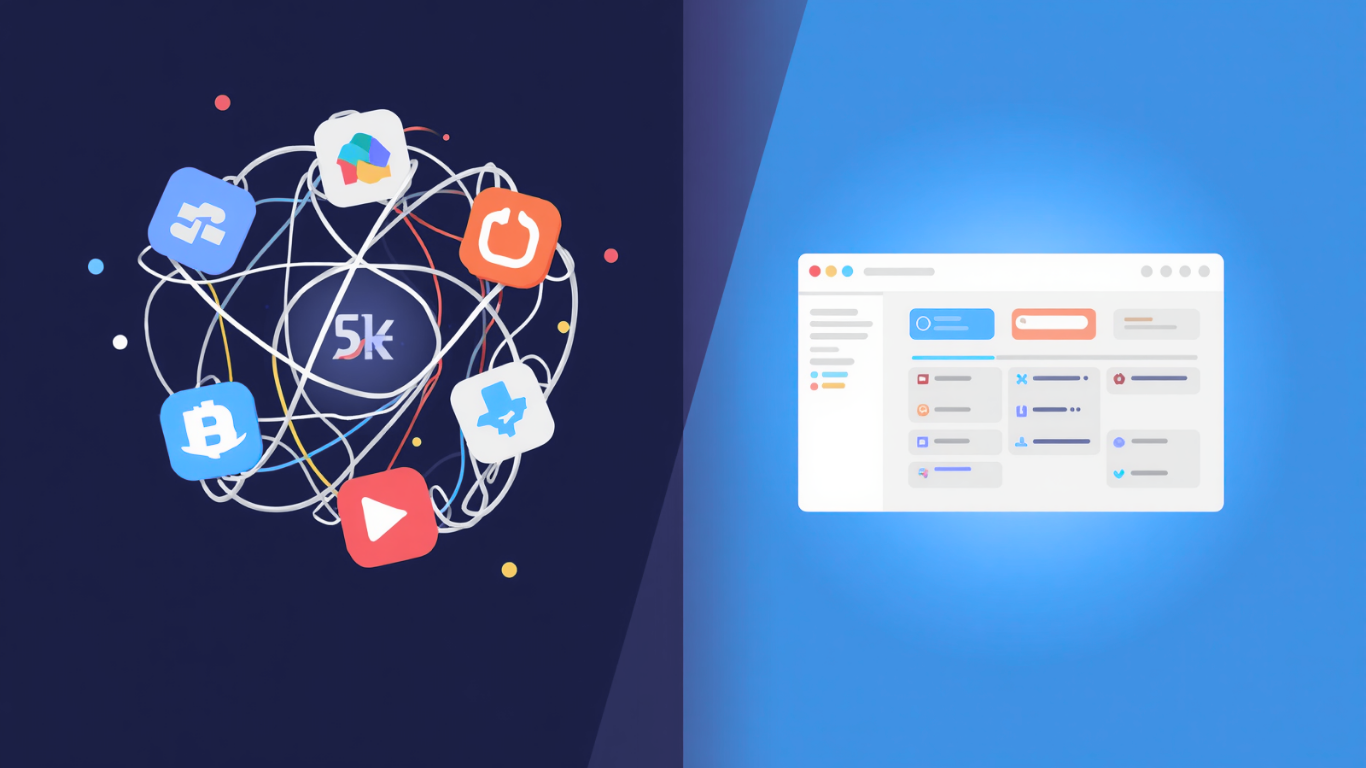
Open your billing page. Go on. There's a decent chance you'll find a product analytics tool, a separate heatmap tool, an email automation platform, a standalone AI chat widget, and something doing attribution. Five line items. Five logins. Five contracts renewing on five different dates. And none of them speaking to each other.
That stack felt sensible when you built it. One tool at a time, each solving a real problem. The trouble is what you ended up with. Not a system. A pile.
The bill is the small problem
Let's start with money, because it's the easy part to see.
The average company wastes 17 to 25% of its software budget on tools nobody really uses, and Gartner reckons around 30% of total SaaS spend is "toxic", going on overlapping features and unused seats. Analytics is one of the most duplicated categories of all. Three tools, same event data, three invoices.
So you're paying multiple times to track the same user doing the same thing. That's the obvious waste. It's also the least of it.
People assume the case for consolidation is about saving money," says Ian Naylor, Founder of SaaSAnalytics.ai. "It helps. But the real cost of a five-tool stack isn't the invoices. It's the decisions you never make because the answer is split across five systems that don't agree with each other.
The invoices you can cancel. The lost decisions you never even notice.
The real cost is the gap between the tools
Here's what fragmentation does to a normal Tuesday.
A user signs up. Your analytics tool logs the event. Your email tool doesn't know it happened yet, so the welcome sequence fires an hour late. The heatmap tool recorded them rage-clicking a broken button, but that data lives in a different dashboard nobody opened. Your AI chat assistant has no idea this person is a paying customer mid-onboarding, so it treats them like a cold stranger. Attribution can't connect the signup to the ad that drove it because the IDs don't match across tools.
Every one of those tools worked. The user still fell through the cracks between them.
That's the trap of running three tools where one would do, except most teams are well past three. The data exists. It's just scattered, mismatched, and a day behind. By the time you've stitched it together by hand in a spreadsheet, the moment to act has gone.
The phrase I hear constantly is 'we have the data somewhere,'" says Becky Halls, Strategist at SaaSAnalytics.ai. "Somewhere is the problem. Data in five tools is five sources of truth, which means none. The team stops trusting any of it and goes back to gut feel.
Gut feel is expensive too. It just hides better.
What changes when it's one platform
Picture the same Tuesday on a single platform instead.
The user signs up, and the event is instantly visible to everything at once. The email sequence fires on time because it shares the same data. The session recording sits beside the event timeline, not in a separate app. The AI chat assistant already knows this is a customer mid-onboarding and responds accordingly. Attribution closes the loop because every event carries the same ID from first touch to revenue.
One snippet. One dataset. One version of the truth.
This is roughly what a modern analytics stack should look like in 2026: behaviour tracking, heatmaps, email and process automation, AI support and attribution sharing a single source of data instead of arguing across five. SaaSAnalytics.ai runs all of it from one JavaScript snippet on your site, or a single API call for a mobile app. Track a user from anonymous first visit to paying customer and beyond, trigger engagement automatically off real behaviour, and let AI support answer with full context, all without exporting a single CSV.
Fewer tools. Fewer gaps. Faster answers.
"But switching is a nightmare"
It's the objection everyone reaches for, and it's fair. Nobody wants a six-week migration project.
The honest version is this. You don't have to rip everything out on day one. Most teams start by dropping the snippet on their site and running it alongside what they already have. You watch the same users flow through one connected view instead of five disconnected ones. Then you cancel the overlapping tools as the renewal dates come up, one by one, once you trust the data.
There's a 30-day free trial and no credit card required to start, so the cost of finding out is basically your time. Start a free trial and point it at one project. See whether one source of truth actually feels different. It usually does.
The quiet tax you're already paying
Even if you never consolidate, you're paying for fragmentation right now.
You pay in the analyst's afternoon spent reconciling two tools that disagree. You pay in the onboarding email that fired a day late. You pay in the churn signal that sat in a heatmap nobody checked. None of it shows up as a line on the invoice. All of it shows up in growth that's slower than it should be.
The five-tool stack didn't feel like a decision. It accumulated. Which means you can undo it the same way, deliberately, one renewal at a time, toward a setup that actually talks to itself.
Your billing page is a good place to start. Go count the line items.
FAQ
What is a SaaS analytics platform, exactly? It's a single tool that tracks user behaviour, measures conversions and attribution, and increasingly handles engagement and support too. The point is one connected dataset instead of separate tools for analytics, heatmaps, email and chat that each see only part of the picture.
Why not just keep best-of-breed tools for each job? Best-of-breed sounds great until the tools have to work together. Each one is strong alone and weak at handoffs. For most SaaS teams the cost of the gaps between specialist tools is higher than the small advantage each one offers on its own.
How much can consolidating actually save? It varies, but with 17 to 25% of software budgets going to unused or overlapping tools, analytics consolidation often pays for itself before you count the time saved. The bigger return is faster, more confident decisions, which is harder to put on a spreadsheet.
Is migrating to one platform a huge project? It doesn't have to be. The common approach is to run the new platform alongside your existing tools, confirm the data, then cancel overlapping subscriptions at renewal. You consolidate gradually, not in one risky weekend.
What does SaaSAnalytics.ai replace? Behaviour analytics, heatmaps and session recordings, email and process automation, AI customer support, and multi-touch attribution, all from one JavaScript snippet. Instead of five tools with five datasets, you get one platform with one source of truth.
How do I try it without committing? There's a 30-day free trial with no credit card required. Add the snippet to a single project, run it next to your current stack, and compare. If one connected view doesn't beat five disconnected ones, you've lost nothing but a little time.