AI Agent Traffic Is Quietly Taking Over Your Product (And Your Analytics Has No Idea)
AI analytics analytics platform analytics tools SaaS analytics subscription analytics
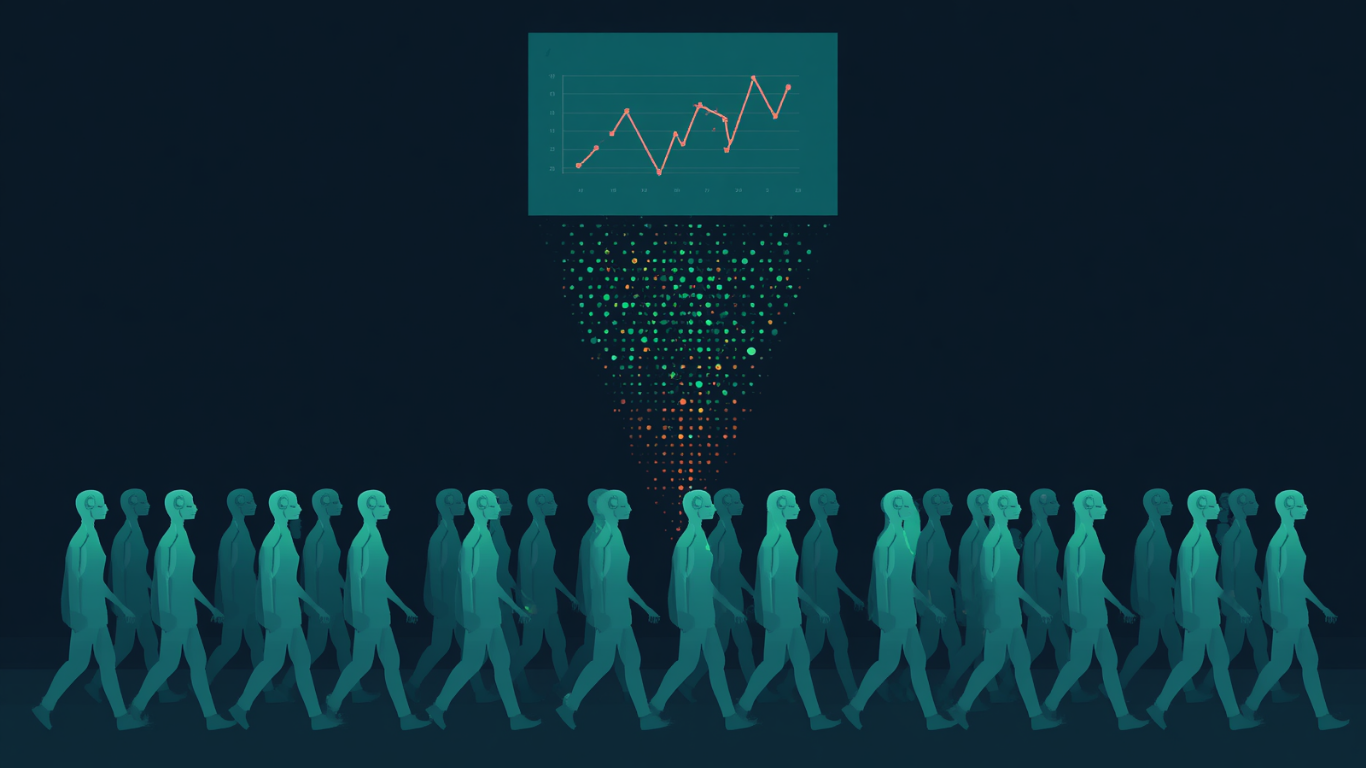
Open your analytics. Look at last week's signups. Now ask yourself a question you probably haven't: how many of those were actually people? Not "mostly people." Actually people. Because the honest answer, for a growing number of SaaS products, is "fewer than the dashboard says." Machines are using your product now. Some are crawling it. Some are testing it. A few are signing up, poking around, and leaving, and your funnel counts every one of them as a warm human lead.
That's the problem with AI agent traffic. It looks like everything else.
The web isn't mostly human anymore
Here's the stat that should stop you mid-coffee. In 2025, automated traffic crossed 53% of all web traffic, with human activity falling to 47%. More than half. The machines won the headcount.
Not all of it is malicious. Some is search crawlers doing their job. Some is AI assistants reading your pricing page so they can answer a buyer's question. And some is the newer, stranger thing: agents acting on a person's behalf, clicking through flows a human used to click themselves. The mix matters. Lumping it all together is exactly the mistake most teams make.
We keep telling teams their traffic has two audiences now, not one," says Ian Naylor, Founder of SaaSAnalytics.ai. "There are people, and there are machines acting for people. Both matter. But if your dashboard can't tell them apart, every conversion rate you report is a blend of two completely different things, and you're making decisions on a number that doesn't describe anyone.
A blended number feels precise. It isn't.
Why a bot in your funnel quietly wrecks your data
Picture a normal week. You get 1,000 signups. You celebrate. Conversion's up.
Except 200 of those were automated. Scrapers filling forms. Agents running a test. A competitor's tool checking your onboarding. Now your activation rate looks low, because 200 "users" signed up and did nothing a human would do. Your sales team chases dead accounts. Your onboarding emails fire at inboxes that don't exist. And the actual story, the one about the 800 real people, gets buried under noise you didn't know was there.
This is the bit people miss. Bots don't just inflate traffic. They distort the ratios you trust most. Activation, time-to-value, trial-to-paid, they all wobble when the denominator is full of machines pretending to be humans.
The first time we segment bot traffic out for a new customer, there's usually a silence on the call," says Becky Halls, Strategist at SaaSAnalytics.ai. "Their 'best' acquisition channel turns out to be half automated. Their conversion rate was never real. It's uncomfortable, but it's better than steering a business off a number that was lying to you the whole time.
Better an uncomfortable truth than a confident fiction.
Not all machine traffic is bad
Worth slowing down here, because the easy reaction is to block everything. Don't.
Some of the most valuable visits you get now come from AI tools reading your site so they can recommend you. That's AI referral traffic is becoming a real channel, and it converts better than almost anything else, because the model already qualified the buyer before sending them over. Block that crawler and you delete yourself from the answer your buyers increasingly trust.
So the goal isn't a wall. It's a filter. You want to wave the helpful machines through, keep the harmful ones out, and label all of it so your human numbers stay clean. Three different jobs. One question underneath them: which is which?
An analyst at a web security firm put it bluntly in a recent briefing: "Companies still design their funnels as if every visitor has a pulse. That assumption broke a while ago, and most dashboards never got the memo." [Note: external quote is a placeholder. Confirm attribution or swap for a sourced quote before publishing.]
The memo's here now. Read it.
How to actually tell agents from humans
You don't need a data science team. You need a few signals running together, because no single tell is reliable on its own.
Start with the boring, useful ones. Known bot user agents and AI crawler signatures catch the polite machines that announce themselves. That clears out a big chunk fast. But the sneaky ones lie about who they are, so user agent alone won't save you.
Then watch behaviour, which is much harder to fake. Real people hesitate. They scroll, misclick, re-read, leave a tab open for nine minutes, come back. A script fills three fields in 400 milliseconds and never moves the mouse. Pull the timing, the cursor movement, the rhythm of how a session actually unfolds, and the machines start glowing in the dark. This is where behavioural analytics earns its keep, because it sees the difference between a human deciding and a bot executing.
Finally, follow the cohort forward. Tag suspected agent sessions and track whether they ever do anything a paying human does. They almost never do. That confirmation loop sharpens your filter over time, so next week's guess is better than this week's.
Run those three together and the fog lifts. Suddenly your "1,000 signups" splits into 800 humans, 150 harmless crawlers, and 50 things you should probably investigate.
The teams who see this first win twice
There's a real edge here, and it's closing.
First win: your numbers get honest. Clean human data means activation, retention and conversion finally describe people, so the decisions you make off them actually land. That alone is worth the effort. Most of your competitors are still reporting blended figures and wondering why their experiments don't replicate.
Second win: you start treating helpful AI agents as a channel instead of a nuisance. Once you can see them, you can feed them, the same way you'd feed any source that sends good buyers. That's far easier when behaviour, attribution and engagement all live in one connected source of truth instead of scattered across tools that each see a slice. One dataset. One view of who, or what, is really visiting.
The machines aren't going away. Their share of the web is climbing, not falling. So the question isn't whether AI agent traffic shows up in your product. It already has. The question is whether you can see it clearly enough to act, or whether you'll keep making real decisions on numbers that quietly stopped being real.
Go check last week's signups. Properly this time.
FAQ
What is AI agent traffic? It's any visit to your site or product generated by software rather than a person directly. That includes search crawlers, AI assistants reading your pages, and autonomous agents completing tasks for a human. Some is helpful, some is harmful, and most analytics tools count all of it as human by default.
How much of my traffic could be bots? More than you'd guess. Automated traffic passed 53% of the entire web in 2025. Your specific share depends on your product and how exposed your forms and APIs are, but assuming it's negligible is the riskiest move you can make.
Why does bot traffic hurt my metrics if it's just extra numbers? Because it changes ratios, not just totals. Bots that sign up but never activate drag down your activation rate. Bots that bounce inflate your traffic while tanking conversion. Every percentage you calculate gets distorted when machines are mixed into the denominator.
Should I just block all bots? No. Some machine traffic, especially AI tools that recommend you to buyers, is genuinely valuable. The aim is to identify and label traffic, let the helpful agents through, and block only what's harmful. Blanket blocking can delete you from AI search results.
How do I tell a bot from a real user? Combine signals. Check user agents for known bots, then watch behaviour, since timing, cursor movement and session rhythm are hard for scripts to fake. Tag suspected agents and track whether they ever behave like paying humans. They rarely do.
How does SaaSAnalytics.ai help with AI agent traffic? The platform captures behavioural and referrer data from a single snippet, so automated sessions can be segmented out of your human numbers and followed through the funnel. You get clean conversion and activation figures, plus visibility into which AI sources are sending real buyers.