Your AI Support Is Flying Blind (And Your Users Know It)
AI analytics AI chat for SaaS onboarding support user behavior analytics user journey analytics SaaS integrations behaviour analytics
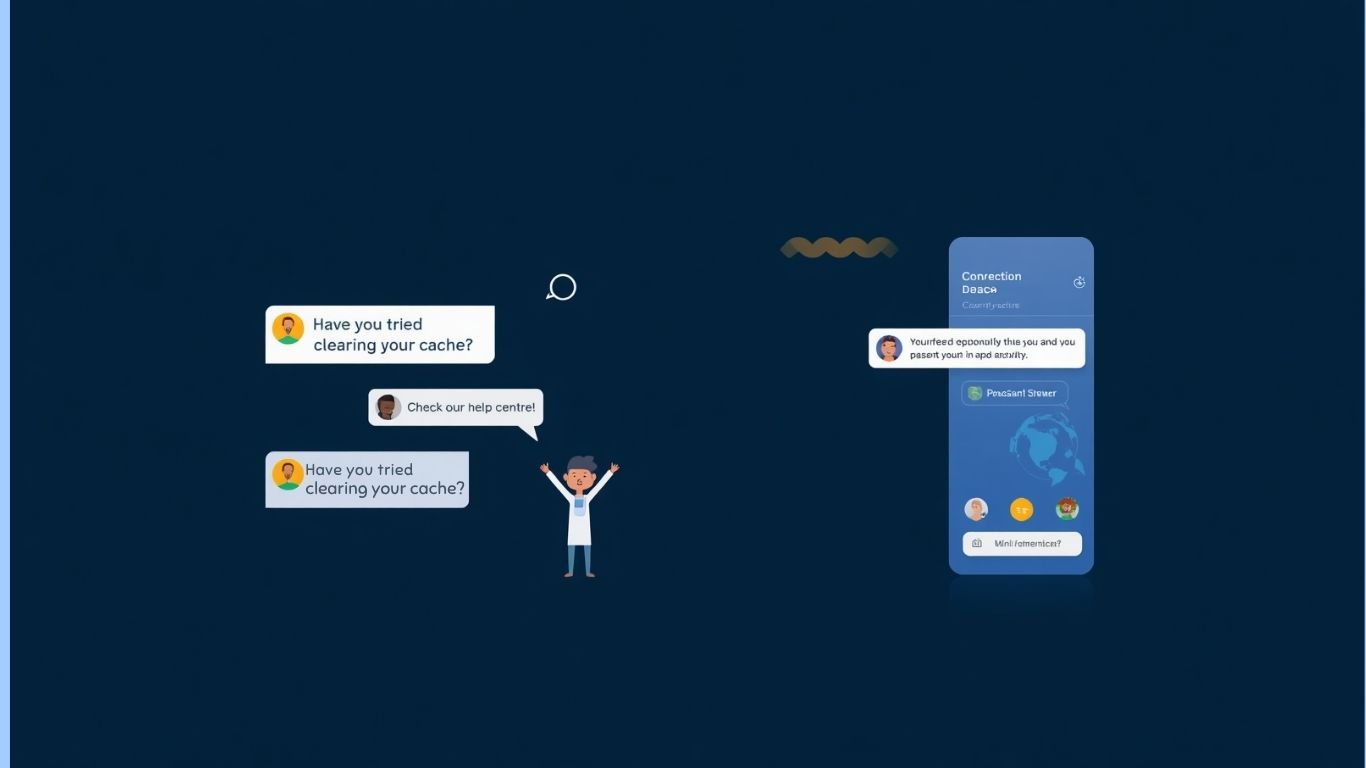
The chatbot answered instantly. Perfectly formatted response. Three relevant help articles linked.
The user cancelled the next day.
The response was accurate. It just had nothing to do with what was actually happening. The user was stuck on a specific workflow step they'd attempted three times that week. The bot had no idea - it had zero access to what they'd been doing in the product. So it gave a generic answer to a specific problem, and the user, who'd already tried every obvious fix, felt like they were talking to something that had no idea who they were.
That feeling is a churn signal. And it's happening in support conversations across SaaS every day.
What "Context-Free" Support Actually Costs
Generic AI support has a specific failure mode. It's not wrong exactly. It just doesn't know enough to be right.
The average AI chatbot in a SaaS product has access to the knowledge base. It can search documentation, find help articles, and respond in natural language. That's genuinely useful for users who have a broad, first-time question they haven't thought to Google.
For everyone else - users who are stuck on something specific, who've already tried the obvious fix, who are three weeks in and frustrated with a particular workflow - a generic response reads as dismissive. It doesn't acknowledge their actual situation. The product, at this particular moment, feels like it doesn't know them.
"The moment a user feels like your support system doesn't know them, they start questioning whether your whole product knows them," says Ian Naylor, Founder of SaaSAnalytics.ai. "That's the point where a support conversation stops being a problem-solving interaction and starts being a loyalty test."
Most generic AI support fails that test. Not dramatically. Just quietly and consistently, leading to low SaaS retention rates.
The Gap Between Support and Product Data
The core problem is structural. Most AI support tools sit completely separate from the rest of the product data stack.
Your analytics platform knows a user has visited the integration settings page four times without completing setup. Your support tool doesn't. So when that user types "I'm having trouble with integrations," the bot starts from zero - asking them to describe the problem, linking to the general integrations guide, suggesting fixes they've already tried twice this week.
That's not a bad bot. It's a disconnected system producing a disconnected response.
Becky Halls, Strategist at SaaSAnalytics.ai, has watched this play out more times than she'd like: "The information needed to give a genuinely helpful support response usually exists somewhere in the product data. The problem is the support layer has no way to see it. You end up with two systems that know half the story between them and can't put it together."
When support can't see what the user has been doing, every interaction starts cold. That's frustrating for the user and wildly inefficient for the support team.
What Changes When Support Knows the Context
Connect the support layer to behavioral data and the interaction changes completely.
A user opens a chat. Before they've typed anything, the system already knows: they're on a trial, they've completed two of four onboarding steps, they've hit the same error screen twice this week, and they visited the pricing page yesterday. That context doesn't get announced to the user — it shapes the response.
Instead of "What can I help you with today?", the conversation can lead with something specific. Instead of generic troubleshooting steps, the AI surfaces the fix for the exact step they're stuck on. Instead of help articles they've already found, the system acknowledges what's been tried and moves straight to the next possibility.
Des Traynor, co-founder of Intercom and one of the more consistent voices on what support should actually look like, has argued this point clearly: personalised, contextual support — the kind that knows the user and meets them where they are — is how you turn a support moment into something that reinforces retention rather than eroding it. Generic support at scale doesn't do that. It just processes volume.
The operational benefit runs both ways. Fewer tickets that end with "never mind, I figured it out" — because the system caught the friction before the user had to write in. Shorter conversations because the bot isn't starting from scratch. And users who feel like the product is paying attention.
The SaaS Retention Math
This isn't a UX nicety. It connects directly to whether users stay.
Support interactions happen at high-stakes moments. A user who reaches out is already experiencing friction - they've hit something that stopped them. How that moment resolves shapes what they think about the product next.
A generic, context-free response that doesn't solve the problem fast delivers a specific message: this product doesn't know me well enough to help me efficiently. That's a quiet vote against renewing.
A specific, contextual response that acknowledges where they are and moves them forward sends something different. This product is paying attention. That's a quiet vote for staying.
B2B SaaS companies using behaviourally-triggered support see 2 to 3 times higher satisfaction scores on support interactions compared to teams running generic AI chat. Support satisfaction scores correlate directly with renewal intent. The numbers connect.
There's also an operational argument. Every support ticket resolved without human escalation is support capacity freed for genuinely complex problems. Context-aware AI handles more, handles it better, and leaves human agents working on things that actually need them. At any reasonable support ticket volume, that adds up fast.
Who This Problem Is Biggest For
Not every SaaS retention team feels this equally. It depends on a few things.
High-touch onboarding products - where users have to build something, configure an integration, or change a workflow to get value - generate the most consequential support moments. That's where a context-free response does the most damage, because the user is in a vulnerable state: invested enough to set up, but not yet past the point where they feel the value.
Teams with limited support capacity feel it most operationally. When a three-person support team is handling volume, a bot that can triage by context - sending users straight to the specific fix rather than asking them to describe the problem - saves real hours.
And early-stage SaaS products, where the product is still changing and the knowledge base hasn't kept pace, find that context-aware support compensates for documentation gaps. The bot doesn't have to know every scenario if it knows what this user has been doing.
How SaaSAnalytics.ai Does This Differently
SaaSAnalytics.ai puts analytics, engagement automation, and AI support on a single platform - all drawing from the same behavioral data.
The support layer isn't bolted on as a separate integration. It runs from the same event tracking that drives your behavioral analytics and your engagement automation. The same data that shows you when users are stalling also informs how the AI responds when they reach out. No separate SDK to maintain. No "why doesn't the support tool know what the analytics tool knows" moments.
Setup is one JavaScript snippet. One implementation, one source of truth, and AI support that can see the problem before the user has to describe it.
If you've read The Activation Gap, you'll recognise the pattern: users fall off at specific, identifiable moments in the product. Context-aware support catches users at exactly those moments — with a response that matches where they actually are, not where a generic knowledge base assumes they might be.
And if the three-tool fragmentation problem sounds familiar, Stop Running Three Tools Where One Will Do covers exactly how disconnected analytics, automation, and support stacks create the gaps that context-aware AI is designed to close.
Sign up to SaaSAnalytics.ai today. One snippet, and your support layer starts working from real behavioral context on day one.
FAQ
Can the AI support access behavioral data without a big integration project? On SaaSAnalytics.ai, yes, because the support layer and the analytics layer are the same platform. No separate integration to build. The behavioral data is already there; the support layer uses it by default, from the same snippet you're already running.
What kind of user context can the AI support see? Plan type, onboarding progress, recent feature activity, friction points encountered, pages visited before reaching out. The things that actually matter for diagnosing a problem - rather than requiring the user to explain their situation from scratch.
Isn't generic AI support good enough for basic questions? For first-time, simple questions, it handles well. The interactions that matter most, the ones happening when a user is stuck and starting to lose confidence in the product, are rarely simple. Those are the moments where context makes the actual difference between a user who figures it out and one who quietly doesn't come back.
How does this affect support team workload? It reduces it. Context-aware AI resolves more issues without escalation. When it does escalate, it hands off a complete picture of what happened — rather than requiring the support agent to reconstruct the user's situation from a one-line description.
We already have Intercom. Is there a reason to consider switching? If Intercom is fully connected to your product analytics, your situation is better than most. But most Intercom deployments run on knowledge base content alone - the bot doesn't have visibility into what the user was doing in the product before they opened a chat. If that sounds familiar, it's worth a closer look at whether you're getting full value or just the surface layer.
How quickly does context-aware AI support start making a measurable difference? Most teams see meaningful shifts in support satisfaction and resolution rates within the first month. The clearest early signal is resolution-without-escalation rate - if context-aware AI is working, that number rises because the AI is solving problems it previously couldn't touch.