Why SaaSAnalytics Is the Analytics Platform SaaS Businesses Actually Need
SaaS analytics AI analytics product analytics real-time analytics SaaS growth
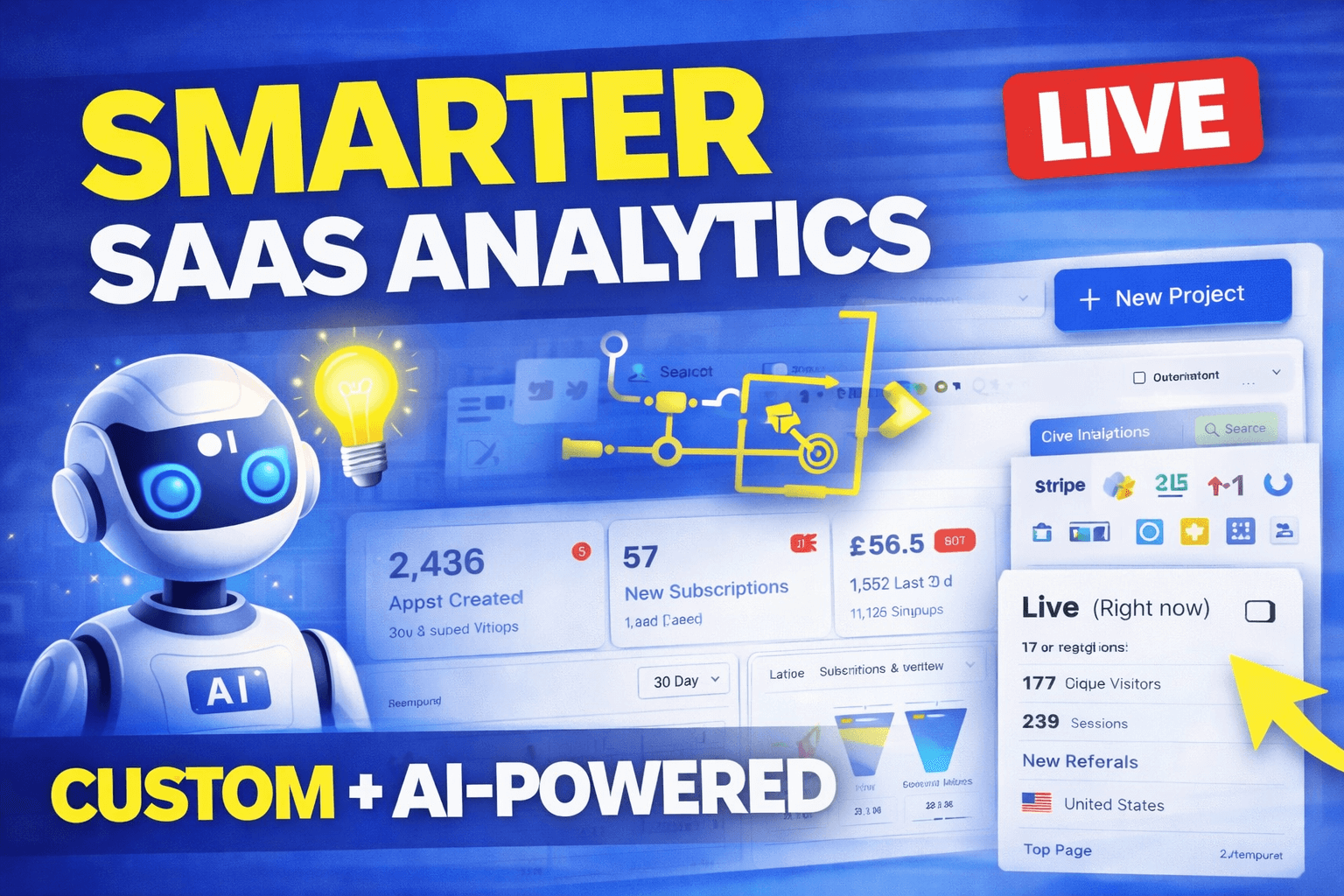
If you run a SaaS or any online-first business, analytics probably isn’t helping you as much as it should.
You have data. You just don’t have confidence in it.
You’re staring at dashboards full of numbers, charts, and trends, but when it comes time to answer the real questions – why did growth slow down?, what changed this week?, what should we actually fix? – analytics suddenly goes quiet.
That gap is exactly why SaaSAnalytics exists.
Not to give you more charts. Not to replace one dashboard with another. But to close the distance between what’s happening and what you should do next.
The Real Problem Isn’t Data. It’s Relevance.
Most analytics platforms were built with a very specific user in mind: analysts.
They assume someone has the time, context, and technical patience to stitch together reports, compare time ranges, and manually interpret what matters. That might work in large enterprises. It breaks down fast in SaaS.
In a SaaS business, analytics needs to work for founders, product managers, marketers, and operators – often all at once. These people don’t want raw data. They want signals. They want to know when something meaningful changes and why.
SaaSAnalytics starts from that reality.
Instead of asking “what data can we show?”, it asks a different question:
“What decisions does this team need to make?”
Everything in the platform flows from that.
Built for the Founder Who Has Five Tabs Open and No Time
Founders don’t wake up wanting to analyse traffic.
They want to know:
- Is the business healthy?
- Is anything broken?
- Where should I focus today?
SaaSAnalytics gives founders a genuine control layer. A place where multiple projects can be viewed side by side, where key metrics are visible instantly, and where attention is drawn to what actually needs action.
The portfolio view isn’t just a convenience feature. It’s a recognition that many SaaS founders aren’t running one product. They’re running several experiments, brands, or revenue streams at the same time.
Instead of diving into each project individually, SaaSAnalytics lets you see performance, issues, and momentum across everything in one place. When something slips, you see it immediately. When something takes off, you know where to lean in.
That alone changes how founders operate.
Product Teams Need Clarity, Not Vanity Metrics
Product teams live in the uncomfortable middle ground between usage and outcomes.
They’re not interested in page views. They care about behaviour. They want to understand how users move through the product, where friction exists, and which actions actually correlate with conversion or retention.
This is where SaaSAnalytics quietly does something important.
It doesn’t force product teams into predefined funnels or rigid event models. Instead, it lets them define what matters to their product. Events are first-class. Funnels are custom. User journeys reflect real flows, not textbook examples.
When product teams can see how real users move from first interaction to meaningful value – and where that journey breaks down – decisions stop being subjective. You’re no longer arguing opinions. You’re responding to behaviour.
Growth and Marketing Finally Share the Same Truth
One of the most common tensions in SaaS teams sits between growth and the rest of the business.
Marketing says a campaign worked. Product says the users didn’t convert. Finance says revenue doesn’t match the story. Everyone is technically “right”, because everyone is looking at different data.
SaaSAnalytics removes that friction by treating attribution, conversion, and revenue as part of the same system.
Traffic sources aren’t just counted. They’re connected to downstream behaviour. Campaigns don’t just drive visits – they drive events, conversions, and revenue. When something performs well, you can see how and why, not just that it did.
That shared context matters more than any individual metric. It’s what allows teams to align instead of debate.
Live Analytics Changes How You React
There’s a subtle but important shift that happens when analytics becomes live.
You stop waiting.
Instead of checking dashboards at the end of the day or week, you start noticing behaviour as it unfolds. A spike in traffic. A drop in conversions. A surge in a specific country. An unexpected referrer.
SaaSAnalytics’ live view isn’t there for novelty. It’s there because timing matters. When you can see what’s happening now, you can respond now. That’s the difference between diagnosing a problem and preventing it.
Over time, teams stop treating analytics as a reporting tool and start treating it as situational awareness.
AI That Reduces Work Instead of Creating More
AI is everywhere right now. Most of it adds noise.
In SaaSAnalytics, AI has a very specific job: reduce the amount of thinking humans have to do just to understand what’s going on.
The platform continuously analyses activity across metrics, funnels, journeys, and engagement to surface patterns and insights automatically. Not alerts for everything. Just signals that are likely to matter.
On top of that, teams can ask questions in plain language. No dashboards. No query builders. Just questions like a human would naturally ask.
That’s not about replacing analysts. It’s about making insight accessible to everyone else.
Analytics That Actually Leads to Action
A painful truth about analytics is that most insights die in dashboards.
SaaSAnalytics is designed to avoid that fate.
Insights can trigger alerts. Events can trigger automations. Behaviour can trigger messages, workflows, or support actions. Analytics doesn’t sit in isolation – it flows into the systems teams already use to operate the business.
That connection between insight and action is where analytics stops being theoretical and starts driving real outcomes.
Why This Feels Different for SaaS Teams
The reason SaaSAnalytics resonates isn’t because it has more features.
It’s because it respects how SaaS businesses actually work:
- Multiple roles, not one analyst
- Ongoing iteration, not static reporting
- Behaviour over vanity
- Speed over perfection
It’s flexible where it needs to be, opinionated where it should be, and quietly powerful where other tools are loud and shallow.
The Bottom Line
Most analytics tools tell you what happened.
SaaSAnalytics helps you understand what matters, why it matters, and what to do next – across your product, your marketing, your users, and your revenue.
That’s not a small difference. It’s the difference between observing a business and actually running one.