Freemium Conversion Rate: Why Most of Your Free Users Never Pay
behaviour analytics churn and retention funnel analytics for SaaS lifetime value tracking SaaS analytics SaaS attribution user behavior analytics user journey analytics
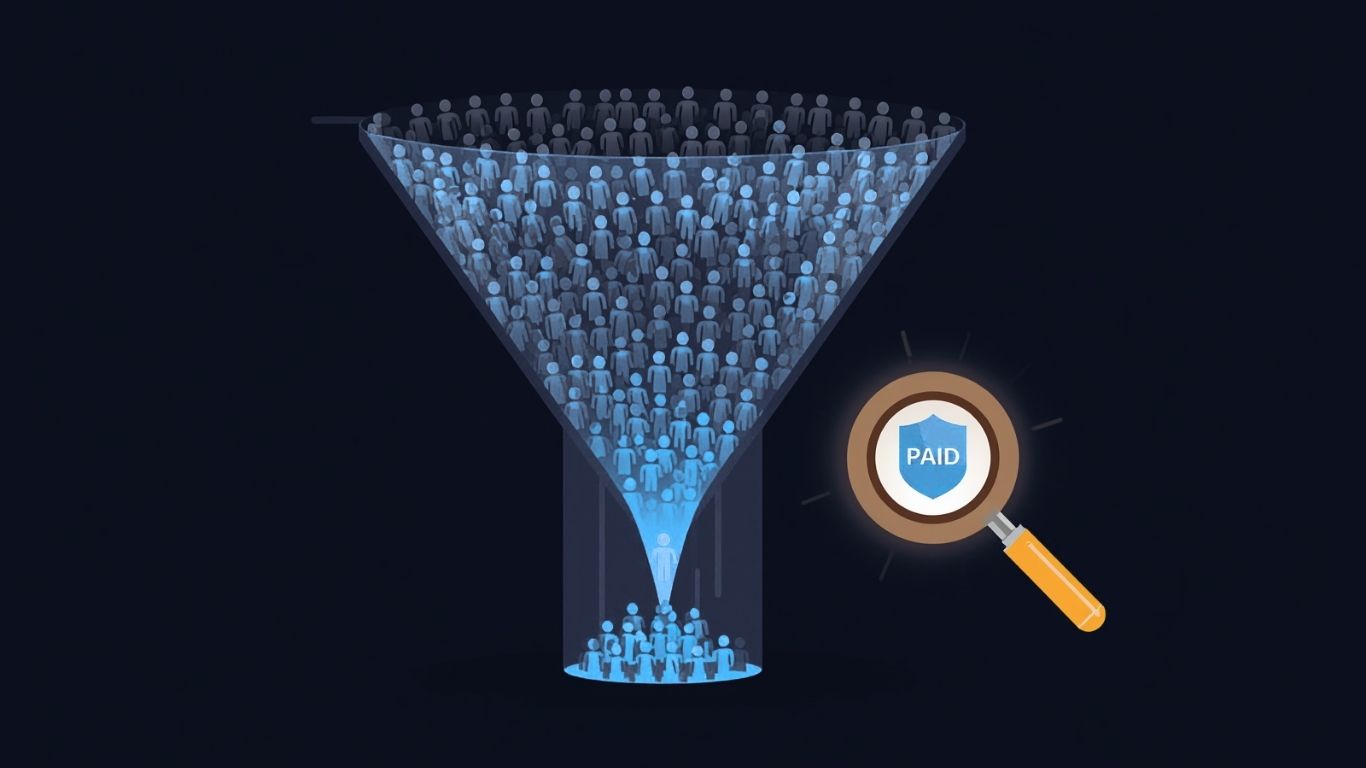
You gave the product away to get people in the door and it worked! Signups are up, the free tier is busy, the top of your funnel looks great in the board deck. Then you check how many of those free users actually upgraded, and the number is depressing.
Welcome to the club. For most SaaS teams, the freemium conversion rate sits somewhere between two and four percent. That's not a rounding error. That's ninety-six free users out of a hundred using your product and paying you nothing.
The usual reaction is to blame pricing. Or the paywall. Or the free tier being too generous. Sometimes that's true. Mostly it isn't. The real problem is that you can't see what your free users are doing, so you're guessing about why they don't pay.
Let's fix the guessing part.
What a "normal" freemium conversion rate actually looks like
First, some calibration, because a lot of founders quietly think they're failing when they're average.
Across a 2026 study of 80-plus freemium SaaS companies, traditional freemium products convert about 3.7% of free users into paying ones. Land-and-expand models sit lower, near 3%. The top performers push into the 8 to 15% range, and a rare few go higher. So if you're at 3%, you're normal. Normal is the problem, not the comfort.
Compare that to free trials. The same research found opt-out free trials convert close to 50% of users, because a card's already on file and the clock is ticking. Freemium has no clock. No card. No natural moment where the user has to decide. That freedom is exactly why freemium fills your funnel, and exactly why it converts so slowly.
Freemium buys reach. It costs you urgency. You have to manufacture the urgency yourself, and you can only do that if you know what each user is doing.
Everyone benchmarks their conversion rate and stops there," says Ian Naylor, Founder of SaaSAnalytics.ai. "The rate isn't the insight. The insight is which behaviours separate the 3% who pay from the 97% who don't. Almost nobody can answer that, because the free user is the least-watched person in the whole business. You track paying customers obsessively and let the free tier run in the dark, which is backwards. The free tier is where the money's decided.
He's right that it's backwards. Your future revenue is in that dark room.
Why free users don't convert (it's rarely the price)
Walk through what usually happens to a free signup.
Someone hears about you, maybe from a buying signal already sitting inside your product that a peer generated, and they sign up. They poke around. Something is confusing, or they don't hit the thing that makes the product click, and they close the tab. They meant to come back. They didn't. That's it. That's most of your lost conversions, and not one of them is about price.
The free users who convert almost always share one trait. They reached value fast. They found the feature that mattered, felt the "oh, this is useful" moment, and built a small habit before life pulled them away. The ones who never convert usually never got there. They churned before they understood what they were quitting.
This is why how fast a new user reaches a real value moment predicts conversion better than almost anything on your pricing page. Speed to value is the hidden lever. And here's the uncomfortable bit. Most teams have no idea what their value moment even is, let alone how many free users reach it.
When a founder tells me their free tier is too generous, I ask which action correlates with upgrading," says Marta Feld, a PLG advisor who works with early-stage SaaS teams. "Usually there's a long pause. They're about to gut the free plan based on a hunch, when the data would've told them the real issue is that 80% of free users never even trigger the feature that makes people pay. You can't price your way out of a problem that's actually about activation.
Cutting the free tier when the real problem is activation just gives you fewer users and the same conversion rate. Now you've hurt reach too.
The signals that predict who's about to pay
Some free users are quietly on the edge of upgrading right now. You could name them if you were watching the right things.
Here are the behaviours that tend to matter, roughly in order of how loudly they shout "this person is close":
Repeat use of a core feature. Not one visit. A pattern. Someone coming back to the same valuable action three or four times is telling you they've built a habit, and habits are what paid plans protect.
Hitting a limit. The free user who keeps bumping into your row cap, seat cap, or usage ceiling is the warmest lead you have. The wall is doing your selling for you.
Inviting a teammate. The second a free user pulls a colleague in, the account stops being personal and starts being organisational. That's the land-and-expand moment, and it's fragile if nobody nudges it.
Returning after a gap. A user who drifts off for a week and comes back on their own has passed a test most never do. They chose you twice.
None of these live in a standard analytics tool. GA4 will tell you a free user visited. It won't tell you they hit your usage limit twice this week while inviting a coworker, which is the exact profile of someone about to enter their card. That signal is sitting in your product data, unread, expiring by the day.
Read it in time and you get to act while the intent is hot. Miss it and the user cools off, and next month you're back to blaming the paywall.
What actually moves the number
You don't need a pricing overhaul. You need to see the free tier clearly and act on three things.
Watch activation for free users specifically. Define the one action that correlates with upgrading, then measure how many free signups reach it and how fast. If most never get there, your problem is the path to value, not the price at the end of it. Fix the path first.
Then catch the warm ones in the moment. When a free user hits a limit or leans hard on a core feature, that's your window to prompt an upgrade, and the prompt should reference what they actually did. "You've hit your limit three times this week" converts far better than a generic "go premium" banner they've learned to ignore. Timing beats persuasion here.
Then plug the leaks. Find where free users drop before value and fix that step, because every user you keep alive long enough to reach the value moment is a user with a real shot at paying. Conversion compounds off retention. No retention, no conversion, no matter how good the offer.
Free users are just paying customers who haven't been shown the reason yet," says Becky Halls, Strategist at SaaSAnalytics.ai. "When you can see a free account hitting its limit and reaching for a teammate, you don't need a clever campaign. You need to be in the room at that moment with the right nudge. The teams stuck at 3% aren't bad at pricing. They just can't see the moment, so they miss it every single time.
The moment is the whole game. Everything else is noise around it.
Why this is a visibility problem, not a marketing one
Here's the trap most teams fall into. They treat a weak freemium conversion rate as a messaging challenge. So they A/B test the upgrade button, rewrite the pricing page, add a countdown. Small lifts, maybe. The core issue stays untouched, because the core issue is that they can't see individual free-user behaviour tied to whether that user eventually pays.
You can't optimise what you can't watch. If your free users, their in-app actions, and your revenue live in three separate tools that don't share an ID, then answering "what does a converting free user do differently" means a manual export marathon that's stale before it's finished. So nobody does it. And the conversion rate stays exactly where it was.
Put behaviour and revenue in one place, per user, and the whole thing gets concrete. You can see the path the 3% take. You can spot the free accounts walking that same path right now. You can meet them at the limit with the right message. The rate stops being a mystery and starts being something you actually steer.
Your free tier is the biggest, richest, most ignored dataset in your company. Start reading it.
FAQ
What is a good freemium conversion rate? For traditional freemium SaaS, roughly 3 to 5% free-to-paid is average, with strong products reaching 8% or more and top performers going higher. Context matters, since land-and-expand and broad consumer tools tend to sit lower while tightly targeted, high-intent products convert better. Treat your own trend over time as the real benchmark rather than the industry median.
Why is my freemium conversion rate so low? Usually because most free users never reach the value moment that makes your product worth paying for, not because the price is wrong. If people churn before they hit the feature that matters, no pricing tweak will save them. The fix is measuring activation for free users and finding where they drop before they get value.
Is freemium or a free trial better for conversion? They do different jobs. Freemium fills the top of your funnel with lots of low-commitment signups but converts slowly, often in the low single digits. Free trials convert far higher, sometimes near half for opt-out trials, but attract fewer people. Many teams run freemium for reach and layer trial-style urgency on top when a user shows buying signals.
Should I make my free tier less generous to boost conversions? Only if you've confirmed the free plan itself is the reason people don't upgrade, which is rarer than founders assume. If the real issue is that free users never reach the value moment, cutting the tier just shrinks your funnel without moving the rate. Diagnose activation before you touch the paywall.
What behaviours predict a free user will upgrade? Repeated use of a core feature, hitting a usage or seat limit, inviting a teammate, and returning after a break. These are intent signals that live in product data, not in standard web analytics. Spotting them in real time lets you prompt an upgrade at the moment the user is actually ready.
How does SaaSAnalytics.ai help improve freemium conversion? It captures free-user behaviour and ties it to each account from a single snippet, so you can see who reaches your value moment, who's hitting limits, and who's showing upgrade intent right now. That lets you fix the path to value and prompt the right users at the right moment, instead of guessing at pricing. You can start free and see your own free tier clearly within days.